What you eat every day shapes your teeth, gums, and long-term oral health more than most people realise.
Free Download: Tooth-Healthy Food Guide
A reference of the best foods for your teeth.

Focused Practice
Team Dentist
Guided Care
Your teeth and gums are living tissue — and like every other part of your body, they are built, maintained, and repaired through the nutrients you consume. Tooth enamel is almost entirely mineral. Gum tissue depends on collagen. Bone that supports your teeth requires calcium, phosphorous, and Vitamin D in constant supply.
At Champions for Oral Health in Fairfax, Virginia, we take a whole-body wellness approach to dentistry. That means looking at nutrition not just as a backdrop to oral health, but as one of its most direct drivers — alongside brushing, flossing, and regular professional care.
Diet affects oral health in two directions: the right nutrients actively build and protect your teeth and gums, while the wrong foods — sugars, acids, and refined starches — actively break them down. Both sides matter.
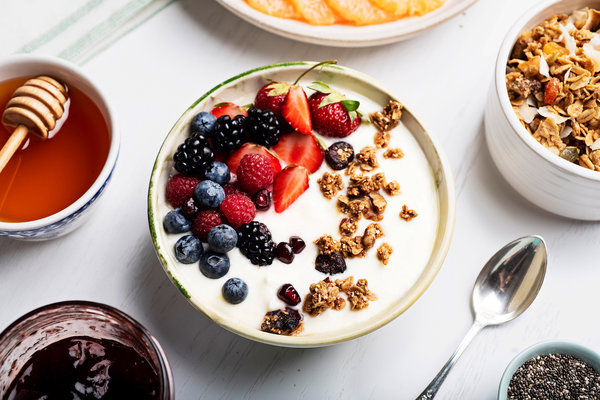
Each of the following nutrient categories plays a specific, clinically meaningful role in oral health. The more consistently these appear in your diet, the stronger the foundation you are building — for your teeth, your gums, and your jaw bone.
The minerals that make up tooth enamel. Remineralize enamel weakened by acid and support the jaw bone that holds teeth in place.
Yogurt · Cheese · Milk · Almonds · Tofu · Seafood · Eggs · Brazil nuts
Chewing stimulates saliva production — nature's best cavity defence. The abrasive texture also gently scrubs plaque from tooth surfaces.
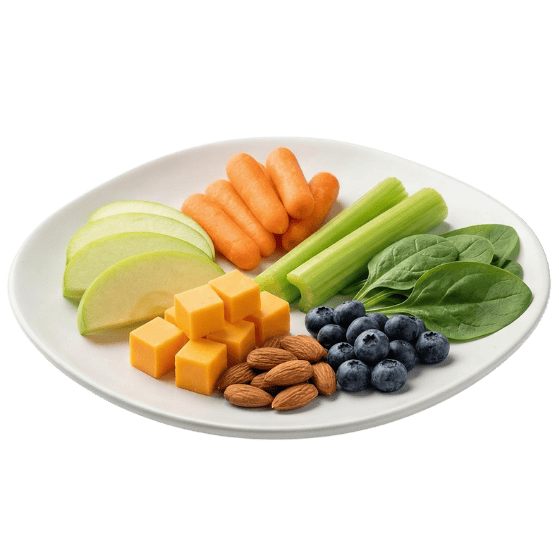
Celery · Carrots · Apples · Cucumbers · Raw broccoli
Required for calcium absorption. Without adequate Vitamin D, calcium-rich foods cannot do their job. Also supports bone density and immune function.
Sunlight exposure · Oily fish · Egg yolks · Cod liver oil · Fortified foods
Essential for collagen production — the protein that holds gum tissue together. Deficiency causes gums to bleed easily and become vulnerable to periodontal bacteria.
Bell peppers · Kiwi · Strawberries · Broccoli · Oranges · Kale
Fight the bacteria that cause gum inflammation and periodontal disease. Protect gum tissue and oral mucosa from cell damage and infection.
Berries · Grapes · Apples · Raisins · Nuts · Beans · Dark leafy greens
Emerging evidence suggests beneficial bacteria may reduce plaque, decrease gum inflammation, and support a healthy oral microbiome. Consistent with our whole-body wellness approach.
Yogurt · Kombucha · Miso · Sauerkraut · Kefir · Fermented vegetables
Promising compounds under active research. May prevent plaque adhesion, disrupt cavity formation, and slow the bacteria driving gum disease and bad breath.
Berries · Cherries · Plums (anthocyanins) · Meat · Soy · Nuts (arginine) · Tea · Cocoa · Flaxseed (polyphenols)
The most underrated oral health nutrient. Fluoridated water helps remineralize enamel. All water rinses food debris, dilutes acids, and maintains the saliva production your mouth depends on.
Plain water · Fluoridated tap water · Herbal teas (unsweetened)
Knowing what to eat is only half the picture. The foods and drinks below are the most common dietary drivers of tooth decay, enamel erosion, and gum disease that we see at Champions for Oral Health. Most patients are surprised by a few of them.
Timing matters as much as what you eat. Sipping a sugary or acidic drink slowly over an hour is far more damaging than drinking the same amount in one go. Frequent snacking keeps your mouth in a constant state of acid attack rather than allowing saliva to neutralise and remineralize between meals.
Sodas, sports drinks, energy drinks, and juices combine sugar (feeds bacteria) with acid (dissolves enamel directly). Even sugar-free diet sodas erode enamel through acidity alone.
Caramel, gummy sweets, and dried fruit cling to tooth surfaces and into fissures, feeding decay-causing bacteria for hours after eating.
White bread, crackers, chips, and pasta convert rapidly to simple sugars in the mouth. They stick in the grooves of teeth and fuel the same bacterial acid attack as sweets.
Reduces saliva production significantly, creating dry mouth — your greatest cavity and gum disease risk factor. Red wine also stains enamel; white wine is highly acidic.
Unsweetened coffee and tea have some antioxidant benefit. Add sugar and they become a prolonged acid bath. Both also stain enamel through tannin deposition over time.
A surprisingly common habit — and one of the most reliable ways to crack teeth and damage existing restorations. The hardness and temperature stress both enamel and ceramic work.
For patients undergoing dental implant surgery, extractions, periodontal treatment, or cosmetic rehabilitation at Champions for Oral Health, diet becomes directly clinical — not just a background health factor.
Protein is required for tissue repair and synthesis of the cells that close a wound or integrate an implant
Vitamin C is essential for collagen formation — directly controlling the speed and quality of soft tissue healing
Vitamin D and calcium are required for osseointegration — the process by which bone bonds to a dental implant
Antioxidants reduce systemic inflammation that can slow healing and compromise implant success
Zinc (found in meat, seeds, and legumes) supports immune function and wound repair
Patients who eat well before and after dental procedures consistently heal faster, experience less post-operative discomfort, and achieve better long-term outcomes. Nutrition is part of your treatment plan at Champions for Oral Health — not an afterthought.
Every patient at Champions for Oral Health receives care that looks beyond your teeth — to the lifestyle factors that protect or undermine your oral health long-term. Diet is always part of that conversation.
Book online or call our team at (703) 591-5637. Same-day appointments available.