Stop Hiding Your Smile with Dental Bridges. Whether you have a missing tooth, an old bridge that looks fake, or dental work that's holding you back — Champions for Oral Health designs your bridge using Digital Smile Design so you can eat, speak, and smile with complete confidence.
Top Dentist
Voted Top Dentists
Five Star Google Reviews

A missing or failing tooth affects far more than your oral health. It changes how you eat, how you speak, how others see you — and most importantly, how you see yourself.
Old bridges look grey, opaque, or "too perfect." Modern porcelain and zirconia materials are dramatically more natural — and you deserve that upgrade.
Avoiding certain foods, shifting how you chew, declining social dinners — a missing or failing tooth silently limits your daily life.
You cover your mouth in photos, angle away from cameras, or rehearse smiling with your lips closed. You shouldn't have to live like that.
You've invested in how you look and feel — but your smile is aging you. Missing teeth cause bone loss that leads to a sunken, older appearance.
Multiple dentists. Multiple opinions. You deserve a clear, honest assessment from someone who will explain your real options without a sales pitch.
The longer you wait, the more bone you lose — and the more complex (and costly) the solution becomes. The best time to act is now.
The longer you wait, the more complex — and costly — the solution becomes. Bone loss begins within months of losing a tooth. The good news: it's not too late, and Dr. Kasperowski's team at Champions for Oral Health has helped hundreds of Northern Virginia patients reclaim their smiles.
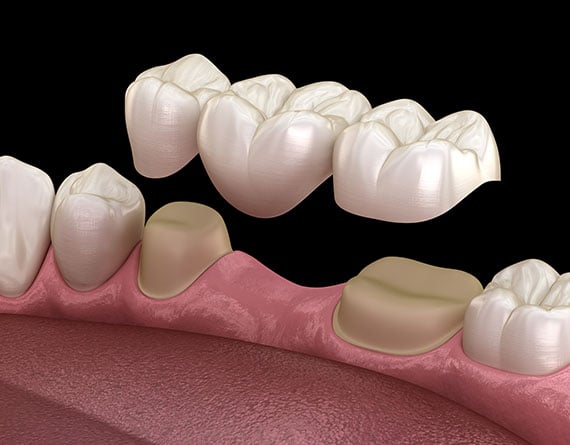
A prosthetic tooth anchored to the natural teeth on either side of the gap using dental crowns. No surgery required.
Best For
1–2 missing teeth with healthy adjacent teeth. Budget-conscious patients who prefer a non-surgical option with faster treatment.
Advantages
No surgery required
Faster treatment timeline
More affordable upfront cost
Considerations
Adjacent teeth require crown preparation
May need replacement after 10–15 years

Titanium implants anchor your bridge directly into the jawbone — no reliance on adjacent teeth. The gold standard for longevity.
Best For
1–3 missing teeth. Patients who want maximum stability, the most natural long-term result, and lifetime value.
Advantages
Lasts a lifetime with proper care
Preserves jawbone, prevents aging
No strain on healthy adjacent teeth
Functions exactly like a real tooth
Considerations

A permanent, fixed solution for patients missing most or all teeth in an arch. Supported by 4–6 implants. Superior to All-on-X hybrids.
Best For
Multiple missing teeth or failing dentition across a full arch. Patients who want the best possible functional and cosmetic result.
Advantages
Permanently fixed — never removed
Feels and functions like natural teeth
Lifetime durability with maintenance
Considerations
Comprehensive treatment investment
Requires adequate bone density or grafting
Not sure which bridge is right for you? That's exactly what your free consultation is for. Dr. Kasperowski will review your X-rays, bone density, existing teeth, and smile goals — then give you a clear, honest recommendation.
We've helped hundreds of patients go from "I've been putting this off for years" to "Why did I wait so long?" Here's exactly what to expect.
Talk to our friendly and knowledgeable team.
Call or Book Online
Our office is a reflection of your care, modern, clean and comfortable.
Leave knowing all of your dental needs have been taken care of.
No two patients are the same.
"My bridge looks grey, fake, or outdated. I want natural-looking dentistry that reflects who I am."
Dental materials have transformed dramatically in the past decade. If your bridge was placed more than 7–10 years ago, it likely looks nothing like a natural tooth compared to today's zirconia and lithium disilicate options. We see patients like this every week — people who've been self-conscious about old dental work for years.
With DSD-guided bridge replacement, we design your new restoration to match your natural teeth, your skin tone, and your facial proportions. The result looks like your tooth — not a generic prosthetic.
"I have a gap from a missing tooth and I need a solution that just works."
Whether you've lost a tooth to injury, decay, or gum disease, the gap is doing damage right now — to your jawbone, your bite, and your confidence. We'll assess whether a traditional bridge or implant-supported bridge is the smarter long-term investment for your specific situation.
No guesswork. No sales pitch. Just an honest recommendation backed by 16+ years of clinical experience and a clear explanation of all your options with real costs upfront.
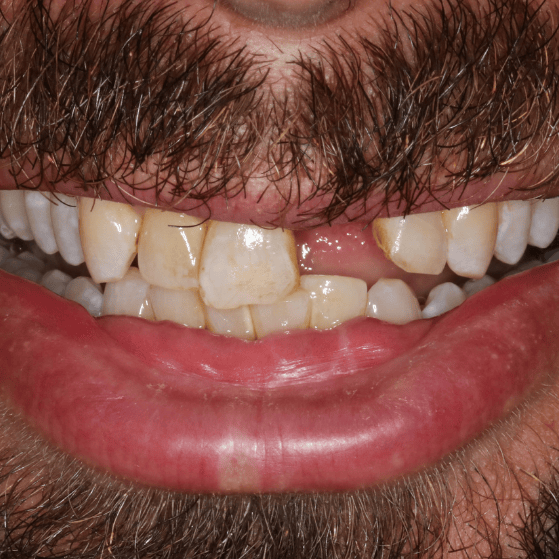
"My smile is aging me and I want it to match the rest of my look."
Missing teeth and old bridges cause bone resorption — which causes the face to appear sunken and aged over time. An implant-supported bridge not only restores your smile, it actively stimulates the jawbone and supports your facial structure.
Many patients at Champions for Oral Health invest in dental bridge restoration alongside other anti-aging treatments. Combined with DSD technology, we design a bridge that takes years off your appearance while looking completely, naturally you.
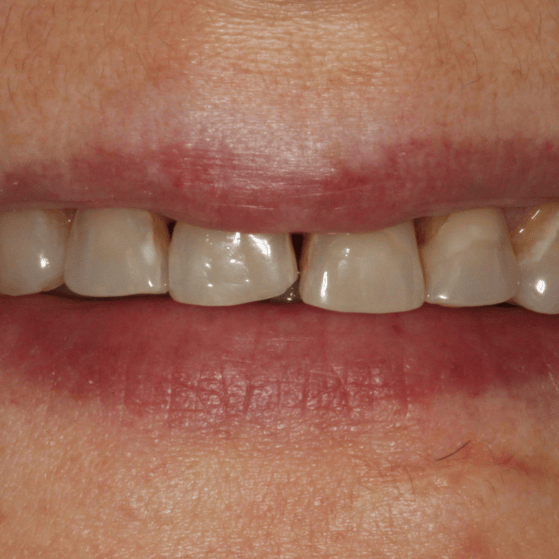
"I have a big event coming up and I can't show up with this smile."
Wedding coming up? New career chapter? Returning to dating after a major life change? A significant milestone often becomes the tipping point for finally getting the smile you deserve — and you deserve to look and feel your best for it.
Dr. Kasperowski understands the importance of timing. With digital planning, we map your complete treatment timeline before starting. The DSD Test Drive means no surprises — you'll know exactly what you're getting well before your big day.
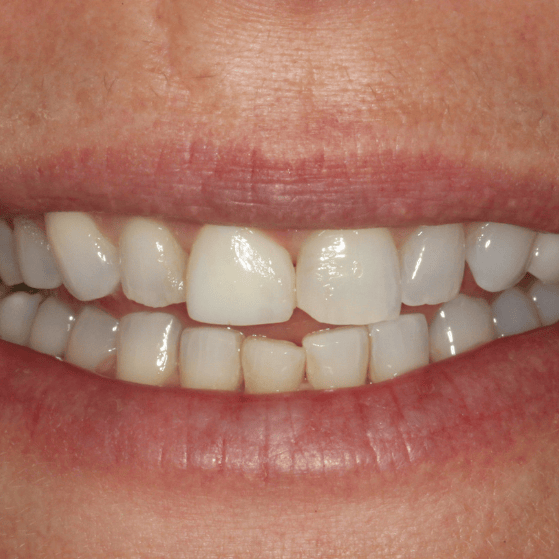
A dental bridge is a fixed prosthetic tooth (or teeth) that fills the gap where one or more natural teeth are missing.
It's called a "bridge" because it literally bridges the gap. Traditional bridges are supported by crowns on the natural teeth on either side of the gap.
Implant-supported bridges are anchored directly into the jawbone using titanium implant posts.
At Champions for Oral Health in Fairfax, VA, all bridges are designed using Digital Smile Design (DSD) technology to ensure a precise fit and completely natural appearance.
The cost varies based on the type of bridge, number of teeth being replaced, and materials used.
Traditional tooth-supported bridges are typically more affordable upfront, while implant-supported bridges have a higher initial cost but are a better long-term investment — often lasting a lifetime vs. 10–15 years for traditional bridges.
At Champions for Oral Health, we provide fully transparent pricing at your free consultation and offer customized payment plans.
We believe cost should never be the reason someone lives with a missing tooth. Call (703) 591-5637 for a personalized estimate.
Traditional tooth-supported bridges typically last 10–15 years with proper care. Implant-supported bridges, when well maintained, can last a lifetime. Key factors affecting longevity include: quality of materials (we use premium zirconia and lithium disilicate), precision of fit (our DSD digital planning ensures accuracy), and home care. All bridges placed at Champions for Oral Health are backed by our 5 Smile Makeover Standards Guarantee.
A dental implant is a single titanium post in the jawbone topped with a crown — it replaces one tooth without affecting adjacent teeth.
A dental bridge replaces one or more missing teeth and can be tooth-supported (relying on adjacent natural teeth as anchors) or implant-supported.
For a single missing tooth, implants are generally preferred because they preserve jawbone and don't require altering healthy adjacent teeth.
For multiple consecutive missing teeth, an implant-supported bridge may be the most efficient and cost-effective solution. Dr. Kasperowski will help you choose the right option during your free consultation.
Most patients report minimal discomfort. For traditional bridges, local anesthesia numbs the area completely during crown preparation and fitting.
For implant-supported bridges, implant placement is a minor surgical procedure performed under local anesthesia — most patients describe post-procedure soreness similar to a tooth extraction, managed easily with over-the-counter pain relief.
At Champions for Oral Health, we offer nitrous oxide, oral sedation, and IV sedation for anxious patients. You are never expected to "push through" discomfort.
A traditional bridge typically requires 2–3 visits over 2–4 weeks. An implant-supported bridge takes longer — typically 3–6 months from implant placement to final bridge fitting — because the implants need to integrate with the jawbone (osseointegration).
However, with our digital planning process, every step is mapped out before we begin so there are no surprises. We'll give you a clear, honest timeline at your consultation.
Bone loss is common after tooth loss and can affect eligibility for implant-supported bridges. However, bone grafting can often restore lost bone mass, making implants possible even for patients previously told they weren't candidates.
Dr. Kasperowski uses low-radiation 3D cone beam CT scans to precisely assess your bone density and volume before recommending treatment.
Even with significant bone loss, a traditional bridge may be an excellent option. The right answer depends on your specific anatomy — which is why a thorough consultation is essential.
"Natural-looking" isn't just a promise here — it's engineered into our process. Champions for Oral Health uses Digital Smile Design to design your bridge in proportion with your facial anatomy, lips, existing teeth, and skin tone.
We use premium zirconia and porcelain with the translucency and color gradations of natural teeth.
Before your permanent bridge is made, you wear a physical mock-up (the "Smile Test Drive") so you see and approve the result in real life first.
We work with master ceramists who hand-characterize each bridge for the most natural finish possible.
Many dental insurance plans in Virginia cover a portion of traditional bridge costs — typically 50% of major restorative procedures after deductible and waiting periods.
Implant-supported bridges are less commonly covered, though some plans now include implant benefits. Our team will review your insurance benefits during your consultation and provide a clear breakdown of what's covered.
We also offer flexible payment plans and third-party financing options to make treatment accessible.
Champions for Oral Health is the only Digital Smile Design (DSD)-certified practice in Fairfax, Virginia — meaning every bridge goes through precision digital planning to ensure a natural appearance, ideal fit, and optimal function, guaranteed under our 5 Smile Makeover Standards.
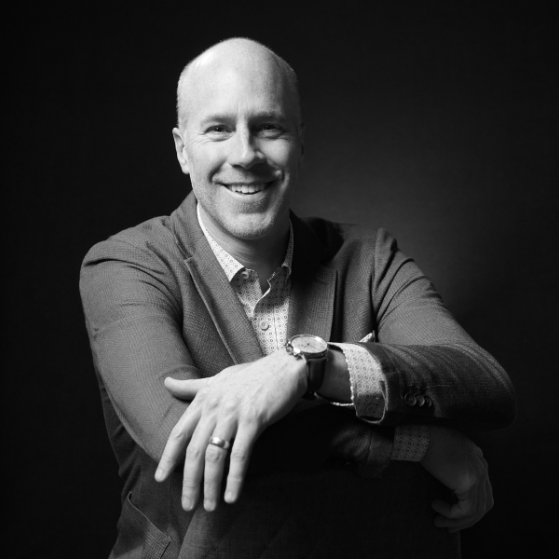
Dr. Kasperowski has 17+ years of experience, has been named Top Dentist in Northern Virginia 15 consecutive years, and serves as the Washington Commanders' official team dentist. We offer a "Smile Test Drive" so you see your results before committing, and our 300+ five-star Google reviews speak for themselves.
Call (703) 591-5637 to start with a free consultation.
Hundreds of patients in Fairfax, Oakton, McLean, Vienna, and across Northern Virginia have trusted Dr. Kasperowski to give them back their smile. Now it's your turn. No obligation, no pressure, no guesswork — just an honest conversation about your options.
Book online or call our team at (703) 591-5637. Same-day appointments available.