Endodontics, Fairfax, VA

Root Canal Treatment in Fairfax, VA

Modern root canal therapy is as comfortable as a filling — and the most effective way to save an infected tooth, eliminate pain, and avoid extraction.


Root Canal
Endodontics

Root Canal

The truth about root canals — and why the fear is outdated

Root canal treatment has a reputation it no longer deserves. That reputation was built on dental experiences from a generation ago — before modern anesthesia, fine rotary instrumentation, and 3D CBCT imaging changed what endodontic treatment actually feels like.

Today, a root canal performed at Champions for Oral Health in Fairfax, Virginia, is not significantly different in comfort from having a filling placed. The procedure is designed to eliminate pain — not create it. The severe toothache that sends patients to us is the infection, not the treatment.

The Myth

  • Root canals are one of the most painful dental procedures you can have.

  • It's better to just pull the tooth rather than go through a root canal.

  • Root canals cause illness or systemic disease.

The Reality

  • Root canals relieve pain. Performed under modern local anesthesia, most patients report that the procedure itself was far less uncomfortable than the toothache that preceded it.

  • Saving your natural tooth is almost always the better long-term outcome. Extraction leads to bone loss, tooth movement, and the need for an implant or bridge — which costs significantly more than a root canal and crown.

  • This claim originates from discredited 100-year-old research. Modern peer-reviewed evidence does not support a causal link between properly performed root canal treatment and systemic illness.

Signs you may need a root canal

Some symptoms are clear indicators of pulp infection or irreversible inflammation. Others are subtler — and a small number of teeth requiring root canal treatment show no symptoms at all, only detected through X-ray or CBCT imaging during a routine examination.

If you are experiencing any of these symptoms, do not wait. A dental infection does not resolve on its own — it progresses. Earlier treatment means simpler treatment, better outcomes, and lower cost.

Lingering Heat or Cold Sensitivity

Pain that persists for 30+ seconds after a hot or cold stimulus is removed — a sign of irreversible pulp inflammation

Spontaneous Throbbing Pain

Toothache that comes and goes without an obvious trigger, often worse at night or when lying down

Pain When Biting or Pressing

Sharp pain when biting down or touching the tooth — indicating inflammation in the ligament surrounding the root

Tooth Darkening

A tooth that has become noticeably darker than its neighbours, often indicating internal pulp breakdown

Gum Swelling or Pimple

A raised, recurring spot on the gum near the tooth root — a sinus tract draining infection from an abscess

No Symptoms at All

Some abscesses are painless — detected only on X-ray or CBCT imaging as a shadow at the root tip indicating bone involvement

Root canal vs extraction — which is the right choice?

This is the most important decision patients face when presented with a root canal diagnosis. The answer depends on the condition of the tooth — but in most cases where the tooth is structurally sound, saving it is the better long-term outcome.

There are situations where extraction is genuinely the right choice — when a tooth is non-restorable due to severe fracture, excessive bone loss, or poor restorability. At Champions for Oral Health, Dr. Kasperowski will give you an honest assessment of whether your tooth is worth saving — and what the real long-term cost and benefit of each option is.

Tooth Extraction

  • Removes the problem — and the tooth

  • Creates a gap that must be addressed

  • Without replacement: neighbouring teeth drift, bite changes, bone resorbs

  • Replacement options (implant, bridge) cost significantly more than a root canal + crown

  • Implant placement requires healing time before the crown is placed

  • Permanent loss of natural tooth root and proprioception 

Root Canal + Crown

  • Eliminates infection while preserving the tooth

  • No gap — natural tooth remains in position

  • Maintains bone volume and bite alignment

  • Typically less costly overall than extraction + implant

  • Completed in 1–2 appointments

  • With a crown, the tooth can function for life

What happens during root canal treatment?

The procedure typically takes one to two appointments depending on the complexity of the tooth's canal anatomy and the extent of infection. Here is a step-by-step overview of what to expect at Champions for Oral Health:

Book an Appointment
01

CBCT Imaging & Diagnosis

Before treatment begins, we take a CBCT 3D scan of the tooth to map its exact canal anatomy, identify any hidden canals, assess the extent of bone involvement, and plan the most precise access. This step eliminates guesswork.

02

Anesthesia

Topical anesthetic is applied first, followed by local injection to fully numb the tooth and surrounding tissue. The area is tested before any work begins. You should feel only pressure — not pain.

03

Isolation

A rubber dam is placed to isolate the tooth, keep it clean and dry, and protect the rest of the mouth during treatment.

04

Access & Pulp Removal

A small opening is made through the crown of the tooth. The infected or inflamed pulp tissue is carefully removed using fine endodontic instruments. All canals are located — guided by the CBCT map taken beforehand.

05

Cleaning, Shaping, Irrigation, Filling & Sealing

The canals are cleaned to their full length, shaped with rotary files, and irrigated with antimicrobial solution to eliminate bacteria throughout the canal system. Ozone irrigation may be used as part of our biocompatible approach.

The cleaned canals are filled with a biocompatible material called gutta-percha and sealed to prevent bacterial re-entry. A temporary or permanent filling closes the access opening.

06

Crown Placement

In most cases, a dental crown is placed at a subsequent appointment to protect the tooth from fracture and seal the access point permanently. A tooth restored with a crown after root canal treatment can function for a lifetime.

Three-Step Plan

Your Path to Root Canal Treatment

01

Schedule an Appointment

Talk to our friendly and knowledgeable team.

Call or Book Online

02

Visit the Office

Our office is a reflection of your care, modern, clean and comfortable.

03

Smile

Leave knowing all of your dental needs have been taken care of.

Advanced Technology

Cone Beam CT (CBCT) 3D Imaging

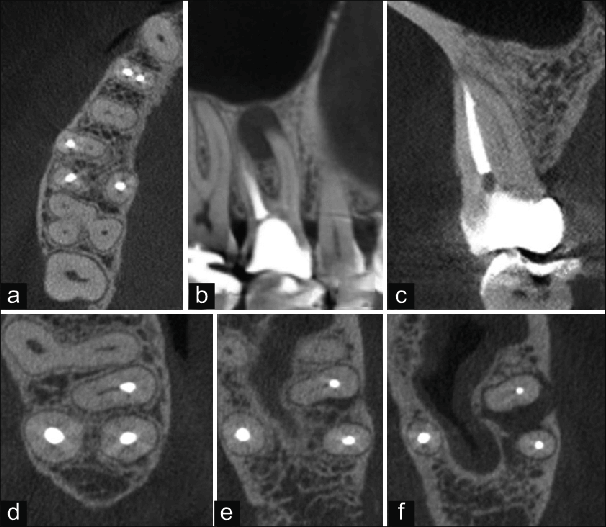
At Champions for Oral Health, CBCT imaging is used to guide root canal diagnosis and treatment planning. It gives us a precise, three-dimensional view of the tooth, canal system, and surrounding bone that a flat X-ray simply cannot provide.

  • Identifies all canals — including hidden accessory and lateral canals missed on 2D X-ray

  • Precisely maps canal curvature and length before a single instrument enters the tooth

  • Detects the full extent of periapical infection and bone involvement

  • Identifies root fractures, resorption, or anatomical complications pre-operatively

  • Confirms healing after treatment at follow-up review

Missed canals are the most common cause of root canal failure. CBCT imaging eliminates the guesswork — giving us the full picture before treatment begins, and giving patients a better chance of long-term success.
cone beam imaging

How Cone Beam CT (CBCT) 3D imaging improves root canal outcomes

Standard 2D dental X-rays have significant limitations when it comes to root canal diagnosis. They compress a three-dimensional structure into a flat image — missing hidden canals, obscuring bone involvement, and failing to show the full extent of infection in many cases.

Root Canal | Endodontics

Frequently asked questions about root canal treatment

Is a root canal painful?

What are the signs I need a root canal?

Should I get a root canal or just have the tooth extracted?

How long does a root canal take?

Do I need a crown after a root canal?

How long does a root canal last?

Are root canals covered by dental insurance?

Don't wait — dental infections get worse, not better

If you have tooth pain, sensitivity that won't go away, or have been told you need a root canal, call us or book online. Same-day emergency appointments are available.

Book online or call our team at (703) 591-5637. Same-day appointments available.

Dental Team in Fairfax