Mouth Breathing: Why Your Dentist May Care About the Way You Breathe
September 24th, 2026
2 min read
Most people expect their dentist to ask about brushing, flossing, cavities, and gums.
They may not expect this question:
“Do you breathe through your mouth?”
But breathing patterns can provide important information about what is happening inside the mouth—and sometimes help us identify something worth investigating beyond the teeth.
Mouth breathing is not always abnormal
There are plenty of times when breathing through your mouth is completely appropriate.
If you are exercising intensely, have a temporary cold, or are dealing with nasal congestion, your body may naturally use the mouth to move more air.
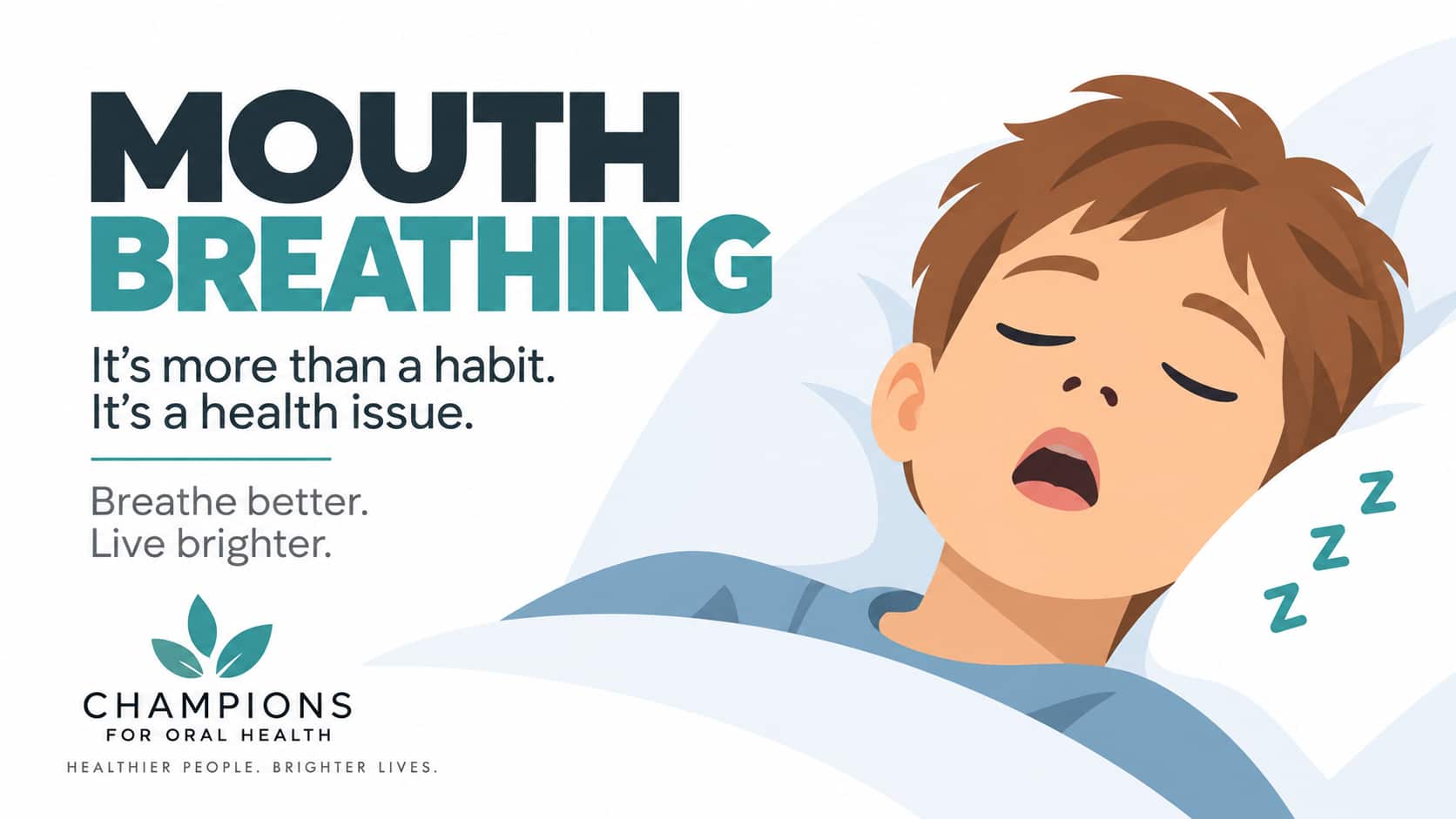
What gets our attention is chronic mouth breathing, especially when someone regularly breathes through the mouth while resting or sleeping.
That may be accompanied by clues such as waking with a dry mouth, morning bad breath, snoring, needing water during the night, or being told that you sleep with your mouth open.
Why does mouth breathing matter to your oral health?
One reason is saliva.
Saliva does much more than keep your mouth wet. It helps lubricate oral tissues, wash away debris, buffer acids, and support the natural environment that helps protect your teeth and gums.
When someone chronically breathes through the mouth, those tissues may dry out.
For some patients, that can contribute to increased cavity risk, bad breath, gum irritation, oral discomfort, and a less protective environment inside the mouth.
That is why the effects of mouth breathing can sometimes show up during a dental examination.
The better question is “Why?”
It would be easy to simply tell someone:
“Keep your mouth closed.”
But that may miss the real issue.
A better question is:
Why does the person feel the need to breathe through their mouth?
Possible contributors can include nasal congestion, allergies, anatomical differences, difficulty breathing comfortably through the nose, or sleep-related breathing problems.
A dentist does not necessarily diagnose every possible cause.
Our role is often to recognize patterns, examine the oral signs, ask the right questions, and determine whether another evaluation may be appropriate.
What about snoring?
Mouth breathing and snoring often appear together.
Neither one automatically means that a patient has obstructive sleep apnea or another sleep disorder.
But they are useful clues.
If someone tells us that they snore loudly, sleep with their mouth open, wake repeatedly, wake with a very dry mouth, or never seem refreshed despite spending enough time in bed, those pieces of information deserve attention.
Sometimes the mouth gives us information that leads to a much broader conversation about airway and sleep.
Mouth breathing matters differently for athletes
Athletes are a particularly interesting population.
During intense exercise, mouth breathing is expected. An athlete trying to move as much air as possible during a sprint, practice, or game is not going to quietly nasal-breathe the entire time.
The more interesting question is what happens after the workout.
Does the athlete continue mouth breathing while at rest?
Do they sleep with their mouth open?
Do they wake with a dry mouth?
Do they snore?
Athletes may already expose their mouths to dehydration, frequent carbohydrate intake, acidic beverages, and prolonged periods of heavy breathing. Chronic dry mouth can potentially add another challenge to that environment.
And if nighttime mouth breathing is occurring alongside poor-quality sleep, the conversation becomes relevant to recovery as well.
That is why modern sports dentistry should involve more than simply making a mouthguard.
Pay attention tonight
You do not need sophisticated technology to begin noticing your own breathing.
When you are sitting quietly tonight, notice whether your lips naturally stay together.
Think about how you feel when you wake up.
Does your mouth feel unusually dry?
Do you immediately reach for water?
Has someone told you that you sleep with your mouth open or snore?
None of those findings provides a diagnosis by itself.
But together, they can provide useful information.
At Champions for Oral Health in Fairfax, Virginia, we believe the mouth can function like a dashboard for the rest of the body. Teeth and gums are important, but saliva, inflammation, airway, breathing, and sleep can all add valuable information to the bigger picture.
Dr. Chad Kasperowski is a DSD Master-certified cosmetic dentist, Fellow of the Academy of General Dentistry, and the Official Team Dentist for the Washington Commanders — bringing the same relentless pursuit of excellence to every patient in his Fairfax, Virginia, chair that he brings to the NFL.
Topics: