Hidden Dental Infections: Why a Tooth Can Be Infected Without Hurting
October 6th, 2026
2 min read
Hidden Dental Infections: Why a Tooth Can Be Infected Without Hurting
One of the most common things patients tell us when we identify a dental problem is:
“But it doesn’t hurt.”
That reaction makes perfect sense.
Most of us associate infection with pain. If something is infected, we expect it to hurt, swell, throb, or otherwise make its presence obvious.
Dental infections do not always follow that pattern.
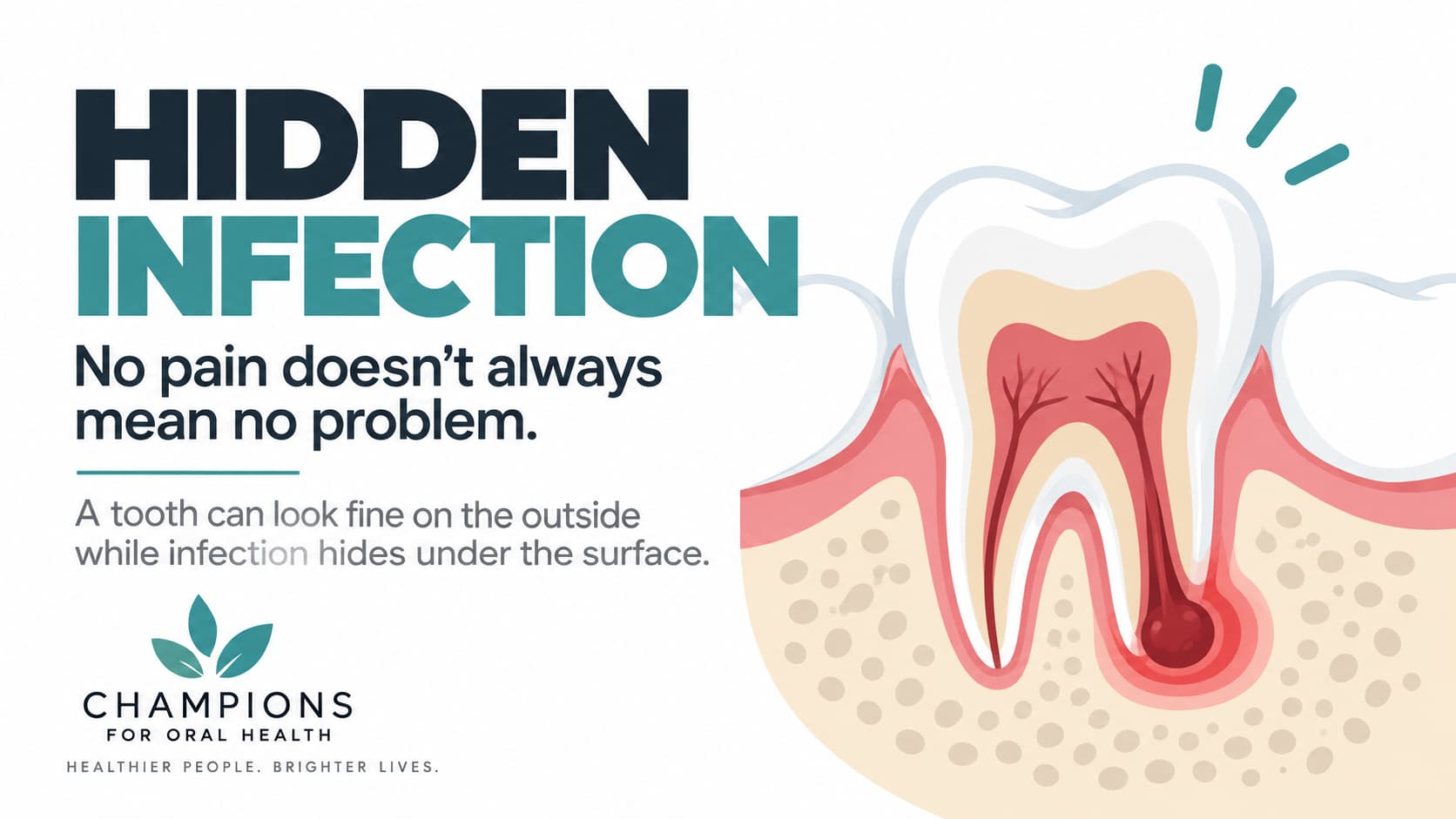
Sometimes a tooth can look normal, feel normal, and still have a significant problem developing beneath the surface.
How can an infected tooth not hurt?
Inside every healthy tooth is living tissue containing nerves and blood vessels.
If that tissue becomes severely inflamed or infected, a tooth may initially become extremely sensitive or painful.
But eventually, the nerve tissue can die.
Once that happens, the tooth may actually become less sensitive.
The infection, however, may continue progressing beyond the tooth and into the tissues surrounding the root.
So the disappearance of pain does not necessarily mean the problem has disappeared.
Sometimes it means the warning system has stopped working.
What causes these hidden infections?
Several things can potentially damage the nerve inside a tooth.
Deep decay is one common cause. But infection can also develop following:
- Previous dental trauma
- Cracks or fractures
- Very deep restorations
- Repeated dental treatment
- Previously treated teeth
- Long-standing bacterial contamination
Trauma deserves particular attention because the damage may not always become obvious immediately.
Someone can injure a tooth and have very few symptoms, only to develop changes months—or even years—later.
How do dentists find a problem that doesn’t hurt?
That is why a comprehensive dental examination involves much more than asking whether anything hurts.
Depending on the situation, we may evaluate a tooth using several pieces of information.
Dental X-rays
Radiographs can sometimes reveal changes in the bone around the root of a tooth that cannot be seen during a normal visual examination.
Vitality testing
Dentists can test how the nerve inside a tooth responds to temperature or other stimuli.
A tooth that looks perfectly healthy may respond very differently from the surrounding teeth.
Clinical examination
We may look for subtle changes such as swelling, discoloration, tenderness, drainage, mobility, cracks, or changes in the gums surrounding a tooth.
Dental history
Sometimes the most important clue is something that happened years earlier.
Previous trauma, extensive dental work, or a history of symptoms can completely change how we evaluate a tooth today.
Why early detection matters
A small, quiet problem is generally easier to manage than an acute dental emergency.
Once an infection becomes symptomatic, patients may experience significant pain, swelling, pressure, drainage, or difficulty chewing.
In some situations, treatment may become more complicated simply because the problem has been allowed to progress.
That is why preventive dentistry should not only focus on preventing cavities.
It should also focus on detecting disease before symptoms force the patient into treatment.
Hidden infections and athletes
This becomes particularly important for athletes.
Athletes routinely play through discomfort. They may postpone treatment because of training schedules, travel, playoffs, or competition.
But a dental infection does not care when the next game is scheduled.
Dental trauma is also relatively common in sports, and an injured tooth can sometimes lose vitality long after the original injury has been forgotten.
That is one reason a comprehensive sports dental evaluation should include more than checking for cavities and making a mouthguard.
We want to identify potential dental problems before they become emergencies during the season.
No pain is good—but it isn't the whole story
Nobody wants dental pain.
But pain is only one source of information.
A healthy mouth requires us to combine symptoms with examination findings, dental imaging, the history of the tooth, and appropriate testing.
At Champions for Oral Health in Fairfax, Virginia, we believe in looking for the reason behind what we see rather than simply waiting for something to hurt.
Sometimes the most important dental problem is the one you cannot feel yet.
Is it time for a more comprehensive look?
If you have a tooth with a history of trauma, extensive previous dental work, an old root canal, unexplained discoloration—or you simply haven't had a comprehensive dental evaluation recently—we can help determine whether anything deserves a closer look.
Contact Champions for Oral Health in Fairfax to schedule a comprehensive dental evaluation.
Dr. Chad Kasperowski is a DSD Master-certified cosmetic dentist, Fellow of the Academy of General Dentistry, and the Official Team Dentist for the Washington Commanders — bringing the same relentless pursuit of excellence to every patient in his Fairfax, Virginia, chair that he brings to the NFL.
Topics:
